
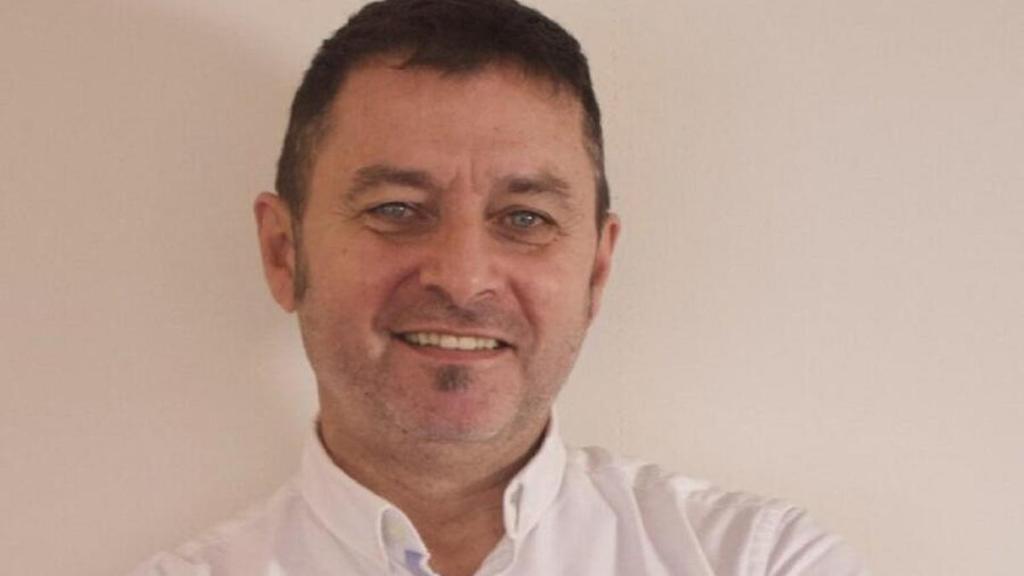
Miguel Túñez López is Full Professor of Organizational Communication at the University of Santiago de Compostela, Spain, and an expert with an extensive track record in new technologies associated with journalism, public relations, and the strategic management of communication. Among his main publications, key terms such as Artificial Intelligence, automation, social media, and digital communication stand out, reflecting a line of research linked to the technological transformations of the sector. Miguel will be a keynote speaker at ICOMTA 2026.
ICOMTA 2026 – Organizational communication has changed radically in recent years. What do you consider to have been the most important turning point in this digital transformation?
Miguel Túñez López – Transformation is no longer linked to updating tools, but rather to updating and automating the operational capabilities of those tools. Algorithms are the new employees of organizations, with both advantages and risks, because artificial intelligence is already being applied across all phases of communication management. In general, the change has taken place at the final stage of an organization’s relationship chain with its audiences, with significant advances in content creation and in the possibility of offering proposals that encourage the feeling that personalized communication is being established.
ICOMTA 2026 – In addition to being an expert in Organizational Communication, you also have vast experience in journalism studies. In this regard, how should journalists adapt to an environment dominated by algorithms and digital platforms?
Miguel Túñez López – Journalism is not alien to this transformation of society and of journalism itself. The change has been silent and progressive over recent decades, beginning with the computerization of newsrooms and changes in printing and distribution systems, and later moving toward new products in digital environments, creating a new media ecosystem. Today, this change is more visible because artificial intelligence is also used to create news content and to manage media outlets, even globally, as occurs with silent media, where content is disseminated and there is even apparent interaction, but without real human intervention beyond the creation of the algorithmic system that supports it.
In this environment, journalists — and I would say, in general, all those who manage communication — have no choice but to adapt by strengthening the cognitive dimension of their work. It is in the versatility and uniqueness of their proposals and actions that their real contribution to the media value chain lies, as well as the greatest difficulties for being replaced by machines.
ICOMTA 2026 – As the opening keynote speaker at ICOMTA 2026, could you share some of the key points of your lecture?
Miguel Túñez López – It will be a critical reflection that encourages us to consider where we are, how we got here, and what awaits us in the future. AI could cause a professional divide because it may be oriented more toward replacing than complementing; because the speed and intensity of its implementation in media outlets and organizations are highly uneven; and because, for example, traditional newsrooms are made up of professionals who do not always retrain to incorporate the possibilities of AI into their professional routines.
The risk lies in the possibilities of content control and in the possibility of failing to detect the intentional assembly of signs which, using journalistic conventions, seek to make a narrative of truthfulness appear real without having any real basis. In organizations, for example, it is a fact that we are moving toward algorithmic governance, which, when projected socially, should make us think about the role mediated communication would play in a future algocracy.
ICOMTA 2026 – Finally, as someone who has witnessed the changes communication has undergone in recent decades, how do you imagine communication 10 years from now?
Miguel Túñez López – I am optimistic, and I trust that, in a decade’s time, we will not yet have shipwrecked in online navigation, dazed by the pursuit of easy clicks to increase the quantitative records of organizations and media outlets. I hope communication maintains its essence as the foundation of social relationships, and that it operates according to applied ethical codes that allow us to distinguish what is truthful from what is imagined.
There will be new mediators, new platforms, new products and formats, and media different from those we know today, but communication must continue to preserve the warmth of human proximity.
Call for Papers and registration are open: https://icomta.net/

