
- Considered one of the most relevant authors on political communication in Spain, Andreu Casero-Ripollés (Universitat Jaume I) will be the opening speaker at ICOMTA’24 in Lima on September 4
- He considers misinformation to be «a major social challenge» and discusses how to contain this destabilization of democracy.
- He warns about the danger of the sophistication of tools for obtaining personal data
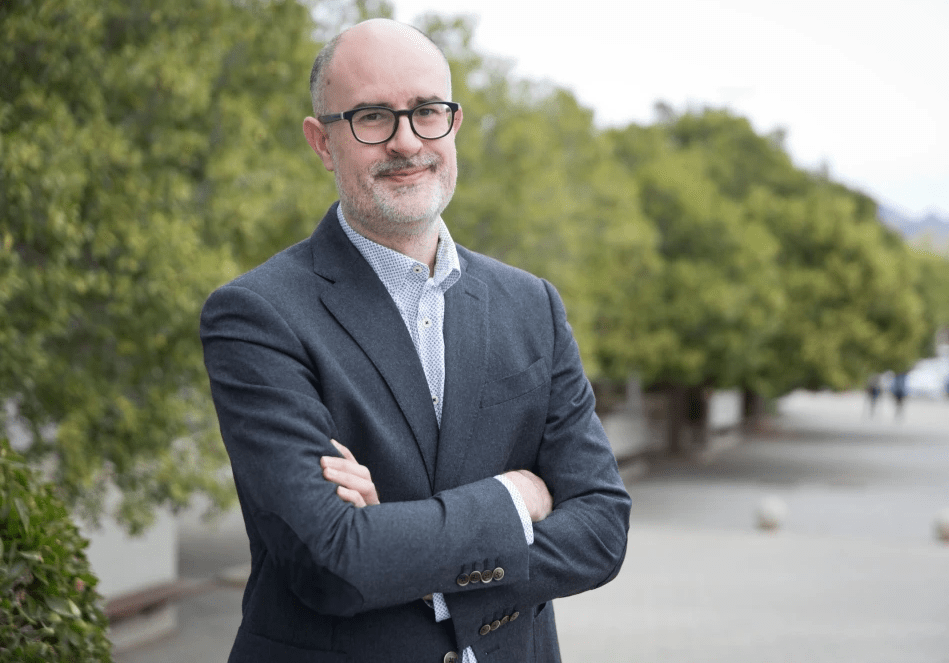
Andreu Casero-Ripollés, one of the most prominent authors on political communication in Spain, is a Professor of Journalism at Universitat Jaume I (Spain) and will be the opening speaker at ICOMTA’24 in Lima on September 4. In this exclusive interview with the ICOMTA team, he talks about the danger of the sophistication of tools for obtaining personal data, misinformation as «a major social challenge,» and how to contain this destabilization of democracy.
ICOMTA Team – A few years ago, you raised some ethical and political challenges related to privacy and the unauthorized use of data on social networks. What has changed since then? Do you think there has been any positive evolution, or is the situation more complex today?
Andreu Casero-Ripollés – The digital environment offers great opportunities for public communication but also generates problems. One of them undoubtedly affects privacy and surveillance. Digital tools have enabled increasingly sophisticated mechanisms to obtain both personal data and data related to the digital behavior of millions of people. The key lies in how this data is used, as it can be used, for example, to improve the effectiveness of public policies or, conversely, to persecute people based on their ideology or political opinions. Data can make us better as a society or can reduce our freedoms and democratic rights.
ICOMTA Team – And what can be done to preserve our privacy and our rights?
Andreu Casero-Ripollés – It is essential to increase transparency on the one hand since data collection is often an opaque process in the hands of large digital media companies with economic interests. On the other hand, it is crucial to increase awareness of the importance of the value of data and privacy in the digital environment among citizens. It is essential for everyone to know how important these issues are and their implications. If we move towards algorithmic literacy, we will gain a lot as a society, without a doubt.
ICOMTA Team – What dangers does the strong presence of misinformation, content often disguised with some truthful data, deepfakes, or the use of AI pose for democracy?
Andreu Casero-Ripollés – Misinformation is a major social challenge. For example, it can be a highly destabilizing factor in the European Parliament elections being held this year. The use of false content becomes more sophisticated and dangerous when combined with emerging technologies like AI. This can affect everything from electoral behavior to the formation of opinions, generating very negative effects.
ICOMTA Team – Yes… Back in 2018, you warned that the digital environment demanded certain skills for proper performance on social networks. What skills are necessary now, and how can a user differentiate between what is real and what is false or malicious?
Andreu Casero-Ripollés – The challenge is of such magnitude that it involves the whole society and not just communication professionals. Therefore, citizens must also develop skills through media and information education to avoid falling into the traps of misinformation. Additionally, institutions and public authorities must promote legislation and action programs to combat this phenomenon. It is essential to prevent significant parts of the population from being structurally and continuously vulnerable to misinformation. Developing social resilience to this serious problem is key.
ICOMTA Team – This is a very current and extremely important issue. Is there any idea you would like to preview from your conference at ICOMTA’24?
Andreu Casero-Ripollés – My idea is to explore the changes that the digital environment is currently introducing in the public role of journalism. I believe it is essential to ask questions about the capacity of journalism and the media to influence the opinions, perceptions, and political behaviors of citizens today. It is crucial to understand the contribution that journalism makes to democracy in these turbulent times we are living in. Therefore, my conference will analyze how the political influence of journalism and the media is changing in today’s society marked by digitalization and misinformation.
ICOMTA Team – Thank you very much, Andreu! We look forward to seeing you soon in Lima. It will be a great pleasure to attend your opening conference, which will surely provide a starting point for the event’s discussions.
For more information about ICOMTA’24 and the final days of the currently open call for papers, visit ICOMTA.
 ICOMTA'26